Family guide
What happens when the school wants to evaluate your child?
New to special education? What a school evaluation is, why it isn't a diagnosis, your consent rights, and what to do when the school reaches out.

Written by Karlie Libraro, M.S., CCC-SLP
Educational advocate · Updated

You got a call or a letter from the school. They've noticed something. Maybe your child is struggling to keep up, maybe a teacher flagged some concerns, and now they're recommending an evaluation. It happens to a lot of parents and caregivers.
Your first reaction might be worry. Does this mean something is really wrong? Are they going to label my child? What exactly are they looking for?
Take a breath. The evaluation process is not something to be afraid of. It's actually one of the most family-friendly parts of the entire special education system, built with your rights front and center.
What is a special education evaluation?
A special education evaluation is a formal assessment the school conducts to understand how your child learns, where they're struggling, and whether they might qualify for special education services.
It's not a single test. Depending on your child's needs, it might include cognitive testing, academic achievement assessments, speech and language evaluation, observations in the classroom, and input from teachers and from you.
The goal isn't to find a label. The goal is to get a complete picture of your child so the team can figure out how to best support them.
An evaluation is not a diagnosis
This is one of the most common points of confusion for families going through this process for the first time.
A school evaluation determines whether your child is eligible for special education services under one of the federally defined eligibility categories, things like Specific Learning Disability, Speech or Language Impairment, or Other Health Impairment.
It does not diagnose your child with ADHD, dyslexia, autism, or anything else. Those are medical or clinical diagnoses that come from doctors, psychologists, or specialists outside of school.
A school evaluation and a clinical diagnosis are two separate things. Your child can have one without the other, and the school's findings don't replace or override anything a medical provider tells you.
You have to say yes first
Many families don't realize that the school cannot evaluate your child without written consent from a parent or legal guardian.
Before anything happens, they'll send you a document called a Prior Written Notice (PWN) along with a consent form explaining what they want to evaluate and why.
Your rights
- Agree and sign the consent form
- Ask questions before you sign anything
- Decline the evaluation if you choose to
- Revoke your consent at any time during the evaluation process if you change your mind
If you want to understand exactly what a PWN is and what your options are once you receive one, our Caregiver Education session on PWNs walks you through it in 30 minutes.
What happens after you say yes
Once you give consent, the clock starts. The school generally has 60 calendar days to complete the evaluation, though timelines can vary by state.
During that window, the evaluation team will gather information from multiple sources. They'll test your child, observe them, review records, and talk to teachers. They should also ask for your input, and that input matters. You know things about your child that no standardized test can capture.
When the evaluation is complete, the school is required to share the results with you in a written report before any eligibility meeting takes place. You're entitled to receive that report at least three school days before the meeting. You can always ask for it earlier, and many schools will accommodate that request, but just know they're not required to provide it before that three school day window.
The evaluation doesn't automatically mean special education
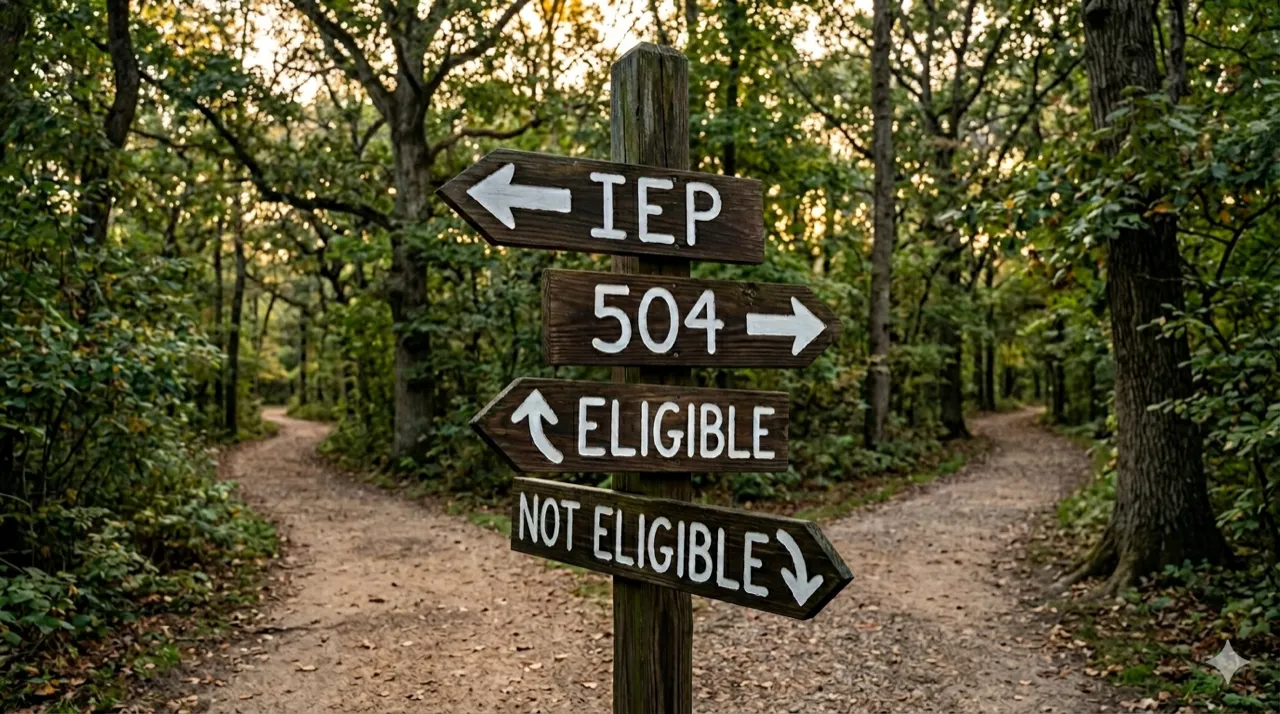
This surprises a lot of families. An evaluation determines whether your child might qualify, but eligibility is a separate decision made by a team, which includes you, at a meeting after the evaluation is complete.
A note on "special education"
If you feel a knot in your stomach when you hear the words "special education," you're not alone. For a lot of families there's still a stigma attached to it. A fear that it means something is seriously wrong, or that their child will be separated from peers, or that it will follow them forever.
Special education is a set of services and supports designed to help your child access their education. It's not a classroom in the back of the building. It's simply a plan, one that you help create and have the right to change.
The evaluation process is the first step toward getting your child what they actually need.
Special education is not a place. It's a plan you help create.
Your rights at a glance
Key rights during the evaluation process
- You must give written consent before any evaluation takes place
- The school must complete the evaluation within the required timeline
- You are entitled to receive all evaluation reports before the eligibility meeting
- You can request an Independent Educational Evaluation (IEE) at public expense if you disagree with the school's findings
- You have the right to bring someone with you to any meeting
Want to go deeper on your rights as a parent or legal guardian? Our Understanding Your Rights Caregiver Education session covers your procedural safeguards, what they mean in plain language, and exactly what you can say and do when you're sitting at that table.
What to do right now
If the school has reached out about an evaluation, start here:
Your action plan
- 1 Don't feel pressured to sign anything on the spot. You can take time to review.
- 2 Ask what areas they want to evaluate and why.
- 3 Request that evaluation reports be sent to you as early as possible once complete.
- 4 Write down any observations about your child at home that might be relevant.
- 5 Consider scheduling a free 15-minute consultation before you sign consent. It's a good time to ask questions with no pressure.
If the school has recommended an evaluation and you're not sure what to do next, let's talk. I offer free 15-minute consultations where we'll review your situation and help you feel confident about your next step.
Once the evaluation is done, the team meets to decide if your child qualifies for special education services. That meeting is where a lot of caregivers feel caught off guard, so it's worth knowing how eligibility is decided before you walk in.
More free printables
Sign up once with your email, and you can download any printable in the library.
- Understanding the 13 IDEA Eligibility Categories All 13 federal eligibility categories, what each means, and how schools use them to decide eligibility. PDF
- What Is a PWN? What a Prior Written Notice is, when the school has to send one and what to do when it shows up. PDF
- Know Your Rights: Procedural Safeguards Summary Your rights as a parent or legal guardian under IDEA, summarized in plain language so you can bring it to any meeting. PDF
- IEP vs 504: What's the Difference? A side-by-side comparison of both plans (who qualifies, what's included, which law governs each), plus the questions worth asking. PDF
Want to understand the process before your meeting?
Caregiver Education sessions are 30 minutes on one topic for $65, and we work from your own child's paperwork. You don't need a block of advocacy hours to book one.
See the Caregiver Education topics